
Tree Service vs. Arborist: What's the Difference?
Many homeowners assume that all tree companies provide the same services and expertise. After all, if a company works on trees, isn't that the same thing as hiring an arborist?
Not necessarily.
Understanding the difference between a tree service company and an arborist can help you make better decisions, protect valuable trees, and avoid costly mistakes.
If you've ever received multiple estimates for the same tree and found that each company recommended something different, this article will help explain why.
What Is a Tree Service?
A tree service company performs tree-related work.
This may include:
Tree pruning
Tree removal
Stump grinding
Storm cleanup
Brush clearing
Cabling and bracing
Tree planting
The primary focus of a tree service is completing the physical work itself.
Some tree service companies employ highly trained arborists. Others do not.
The term "tree service" simply describes the type of work being performed. It does not indicate a specific level of arboricultural education, certification, or expertise.
What Is an Arborist?
An arborist is a tree care professional who specializes in the science, biology, management, and assessment of trees.
Arborists study:
Tree biology
Tree growth and development
Tree risk assessment
Plant health care
Soil science
Insect and disease management
Structural pruning
Tree preservation
Many professional arborists hold credentials through the International Society of Arboriculture (ISA). An ISA Certified Arborist has demonstrated competency through examination and continuing education requirements.
However, certification is only one piece of the puzzle. Experience, field observations, and ongoing education all contribute to a qualified arborist's expertise.
A Simple Way to Understand the Difference
One of the easiest ways to understand the distinction is this:
A tree service performs tree work.
An arborist evaluates trees and develops recommendations based on tree biology, structure, health, and risk.
Sometimes a company provides both services.
Sometimes it does not.
This distinction becomes especially important when dealing with mature trees, declining trees, structural defects, or trees located near homes and other valuable targets.
Why This Difference Matters
Trees are living organisms.
The decision to prune, preserve, cable, monitor, or remove a tree should be based on more than simply whether someone can perform the work.
Proper recommendations require an understanding of:
Tree biology
Structural integrity
Risk potential
Long-term tree health
Site conditions
Species characteristics
A recommendation that ignores these factors may solve one problem while creating another.
What Arborists Look For
During a professional tree inspection, arborists evaluate much more than what is immediately visible from the ground.
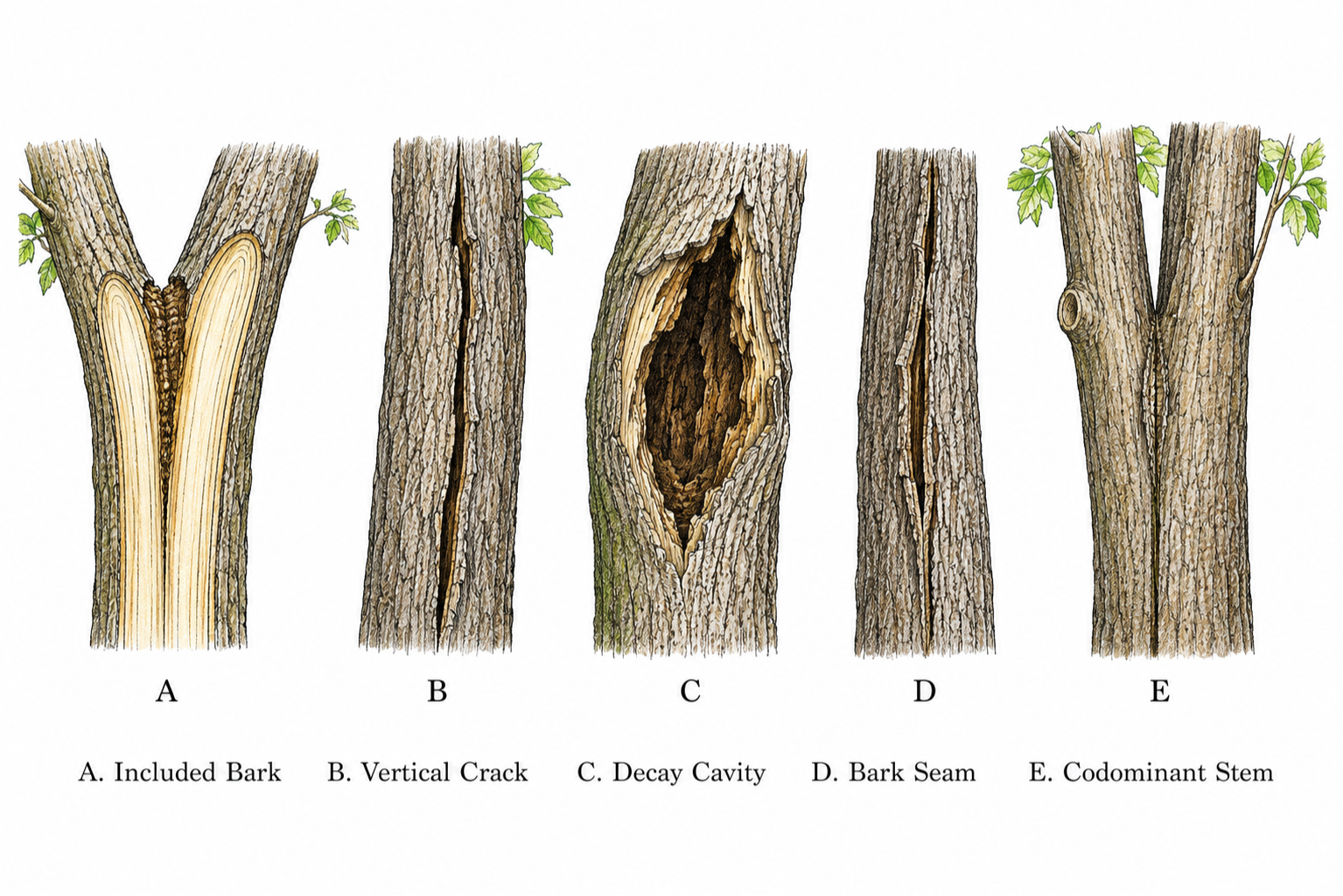
Structural Defects
Arborists inspect for:
Included bark
Codominant stems
Cracks
Cavities
Weak branch attachments
Structural decay
Many of these defects can increase the likelihood of branch or stem failure over time.
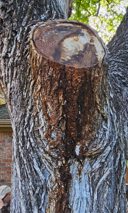
Signs of Decline
Declining trees often display subtle symptoms before major problems become obvious.
Common indicators include:
Thinning foliage
Dead branches
Reduced leaf size
Premature leaf drop
Sparse canopy growth
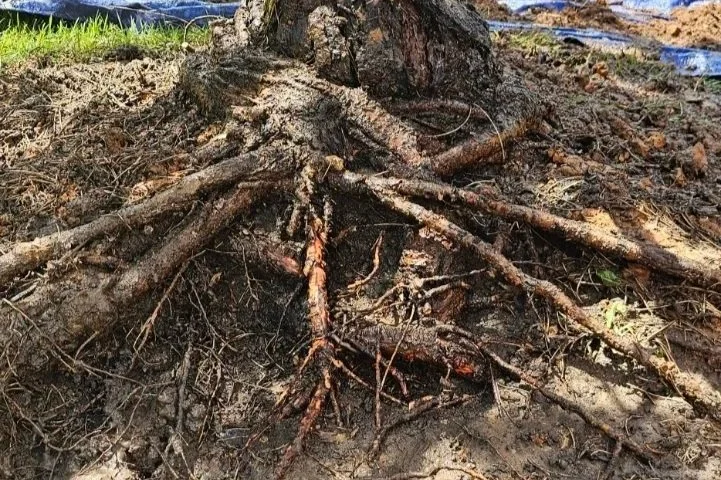
Root Problems
Many tree health issues originate below ground.
Arborists commonly evaluate:
Buried root flares
Girdling roots
Soil compaction
Construction damage
Drainage issues
Root loss
In North Texas, buried root flares are one of the most common problems observed during residential tree inspections.
Decay Indicators
Decay frequently develops internally long before homeowners notice symptoms.
Arborists may look for:
Cavities
Fungal growth
Old wounds
Bark abnormalities
Hollow areas
Signs of poor compartmentalization
What appears healthy from a distance may warrant closer evaluation.
Why Do Different Companies Recommend Different Things?
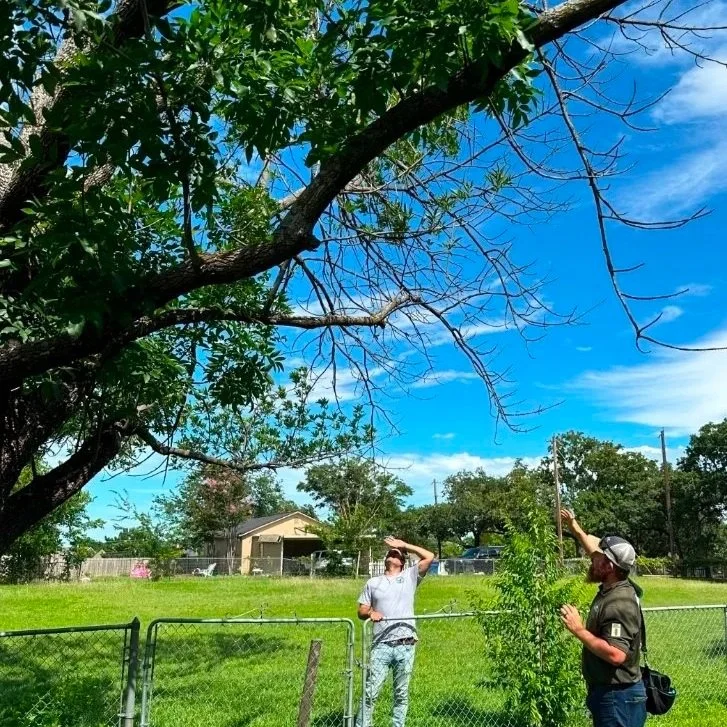
This is one of the most common questions homeowners ask.
"Why did three companies give me three different answers?"
There are several possible reasons.
Different Levels of Training
Not every individual evaluating a tree has the same education, experience, or arboricultural background.
Different Risk Tolerances
Some professionals take a more conservative approach to risk management.
Others may prioritize preservation when conditions allow.
Different Inspection Methods
A recommendation based on a quick visual assessment may differ significantly from one based on a detailed inspection.
Different Objectives
Some professionals focus primarily on completing tree work.
Others focus on long-term tree management and preservation.
These differing perspectives can lead to different recommendations.
What Should Homeowners Watch For?
You do not need to be an arborist to identify potential warning signs.
When walking your property, look for:
Dead branches
Cracks in stems
Cavities
Bark separating from wood
Mushrooms near the base
Leaning trees
Soil lifting around roots
Sparse foliage
Excessive deadwood
New insect activity
Many serious tree problems begin with subtle symptoms that become more significant over time.
When Should You Consult an Arborist?
Consider consulting an arborist when:
A Tree Appears to Be Declining
Signs of decline often indicate underlying issues that require investigation.
Structural Defects Are Present
Cracks, cavities, codominant stems, and included bark should be evaluated by a qualified professional.
Construction Is Planned
Before installing:
Pools
Patios
Driveways
Utilities
Retaining walls
An arborist can help prevent unnecessary root damage.
The Tree Has Significant Value
Large mature trees provide:
Shade
Energy savings
Property value
Environmental benefits
Landscape character
Protecting those assets often begins with proper evaluation.
Questions Homeowners Should Ask
When meeting with a tree company, consider asking:
What specifically are you seeing?
Can you show me the concern?
Why are you recommending this work?
What happens if nothing is done?
Are there alternative options?
What risks should I be aware of?
A qualified professional should be able to explain their recommendations clearly and confidently.
The Bottom Line
A tree service and an arborist are not necessarily the same thing.
A tree service performs tree work.
An arborist evaluates trees through the lens of biology, structure, health, and risk.
The best outcomes often occur when quality tree work is supported by sound arboricultural recommendations.
Understanding that distinction can help homeowners make informed decisions, ask better questions, and become better stewards of the trees growing on their property.
The next time you walk your yard, take a closer look.
You may notice something you've never seen before.
